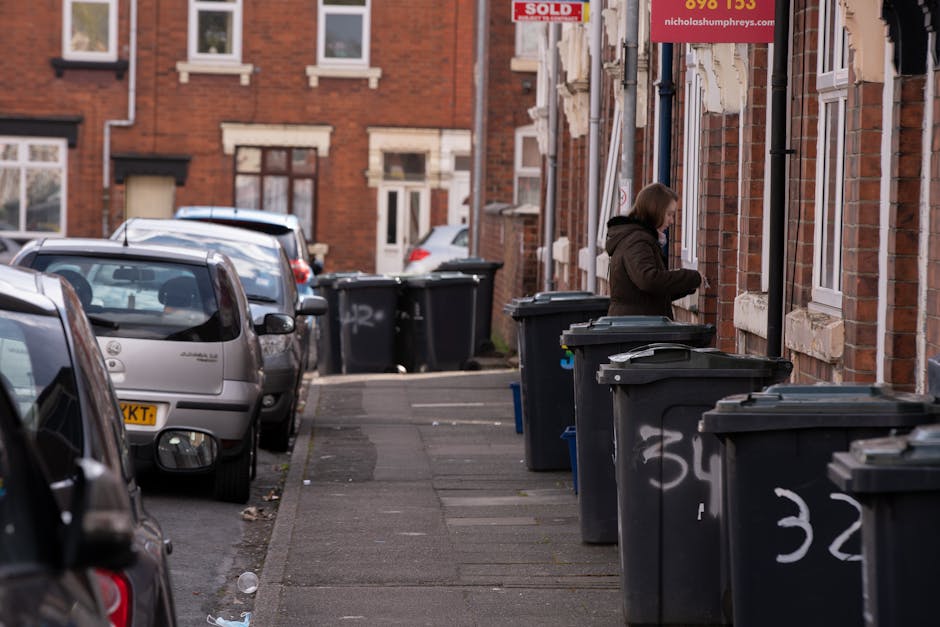
What to know about difficult access rubbish jobs in Finsbury Park
If you've ever looked at a narrow stairwell, a top-floor flat, a basement room, or a back yard with no easy route out and thought, "Well, that's going to be awkward," you already understand the heart of difficult access rubbish jobs in Finsbury Park. The rubbish itself may be ordinary enough. The challenge is the getting-to-it, lifting-it, and getting-it-out part. In a busy part of North London, with shared entrances, tight hallways, parking pressure, and lots of older buildings, access can matter more than the volume of waste.
This guide explains what difficult access rubbish jobs involve, why they need a different approach, and how to plan them properly. You'll also find practical tips, a step-by-step process, a comparison table, and a checklist you can use before booking. It's written for people who want the job done neatly, safely, and without the sort of hassle that turns a straightforward clearance into a half-day puzzle.
Table of Contents
- Why difficult access rubbish jobs in Finsbury Park matter
- How difficult access rubbish jobs work
- Key benefits and practical advantages
- Who this is for and when it makes sense
- Step-by-step guidance
- Expert tips for better results
- Common mistakes to avoid
- Tools, resources and recommendations
- Law, compliance, standards, or best practice
- Options, methods, or comparison table
- Case study or real-world example
- Practical checklist
- Conclusion
- Frequently asked questions
Why difficult access rubbish jobs in Finsbury Park matter
Access sounds like a small detail until you're the one trying to move a broken wardrobe down a cramped stairwell with a sharp turn halfway down. Then it becomes the whole job. In Finsbury Park, that reality shows up a lot: mansion blocks, converted flats, maisonettes, narrow communal hallways, limited on-street parking, and properties where the only route out is not exactly generous. Add in furniture that has swollen with age, builder's waste in awkward bags, or loft contents that have been sitting undisturbed for years, and you have a job that needs planning, not guesswork.
This matters for three reasons. First, safety. A bad lift can hurt someone or damage a wall, banister, floor, or door frame. Second, time. What looks like a quick collection can drag on if the route in and out has not been checked. Third, cost. Difficult access often changes the labour involved, which can affect the quote. Nothing mysterious there, really; the job simply requires more effort, more care, and sometimes more people.
It also matters because rubbish removal is not just about removing clutter. It is about making a property usable again. Maybe you're clearing a flat before a tenancy change. Maybe you're finishing a renovation and the waste is blocking the hallway. Maybe there's a garage so full of old items that the door barely opens. The access issue is part of the problem, but not the only one. The bigger goal is getting the space back without turning the building into a mess on the way.
Practical takeaway: in difficult-access jobs, the route matters as much as the rubbish. Measure, photograph, and describe the access before anyone arrives. It saves time and avoids surprises.
How difficult access rubbish jobs work
A proper difficult access clearance starts before a van pulls up. In a well-run job, the team wants to know what they are dealing with: stairs, lifts, basements, rear entrances, parking restrictions, shared corridors, fragile surfaces, and whether items can be broken down safely. That is especially true when the job involves heavy furniture, bulky rubbish, builders' waste, or mixed household items. The clearer the picture, the smoother the day.
Usually, the process follows a simple pattern. A customer explains the situation, shares photos if possible, and gives a rough idea of what needs removing. The provider then works out the safest access route and the likely labour needed. On arrival, the team checks the property, protects surfaces where necessary, and starts with the easiest removals first. You will often notice that the best teams think in stages: what should be removed whole, what should be carried in pieces, and what needs a two-person lift. That sort of judgement sounds basic, but it makes a huge difference.
In a flat with one narrow staircase, for example, a wardrobe might need to be disassembled on site. In a basement job, damp steps or low headroom may rule out certain lifts altogether. On a busy street, the van position can be just as important as the door route. If the crew has to keep walking long distances from the property to the vehicle, the job takes longer. Simple, but true.
For homeowners and landlords alike, it helps to think of the clearance as a logistics task rather than just a removal task. The rubbish is the end point. The route, handling, and loading plan are what make it work.
Key benefits and practical advantages
Choosing a service that understands difficult access jobs brings a few clear benefits. The obvious one is convenience. But there's more to it than that.
- Less disruption: careful planning means fewer knocks, fewer trips, and less time blocking hallways or communal entrances.
- Better protection for the property: sensible teams move slowly where needed, use the right equipment, and avoid scraping walls or floors.
- Safer lifting: awkward items are handled with a proper lifting approach, which matters when stairs are tight or items are unevenly balanced.
- More accurate pricing: difficult access can be factored into the quote up front rather than discovered halfway through the job.
- Faster completion overall: a job that is planned well is usually much quicker than one that is improvised on the day.
There is also a mental benefit, and it's not small. If you're already dealing with probate, a move, a refurbishment, or an overfull property, the last thing you want is a crew getting stuck at the first landing. A good clearance team should reduce stress, not create a scene in the stairwell. Let's face it, nobody wants a rubbish job that becomes the most memorable event of the week.
For mixed waste situations, it can also help to connect the job to the right service type. A property full of broken furniture may be better approached through furniture clearance, while renovation leftovers may fit builders waste clearance. The right setup reduces handling problems and usually makes the whole job feel more controlled.
Who this is for and when it makes sense
This kind of clearance is for anyone whose rubbish is easy to describe but awkward to reach. That includes a wider range of people than you might think.
- People living in upper-floor flats without lifts.
- Landlords clearing properties between tenancies.
- Homeowners dealing with lofts, basements, or tight side access.
- Flat-share occupants who need bulky waste removed from shared spaces.
- Businesses with internal storage rooms, back offices, or awkward loading points.
- Builders and decorators working in properties with limited access for waste bags or skip alternatives.
It makes sense whenever the job is likely to involve lifting through stairs, narrow doorways, shared entrances, or long internal routes. It also makes sense if the items are heavy, fragile, dirty, or a bit of everything. That mix is common, especially in older properties. You may have a sofa, a broken chest of drawers, a couple of bagged items, and some random bits that need sorting as you go. Truth be told, rubbish jobs are rarely neat little categories.
If you're not sure whether the job counts as difficult access, ask yourself a simple question: would two people carrying a bulky item have to slow right down, turn awkwardly, or stop to re-angle it more than once? If yes, you're probably in difficult-access territory.
Step-by-step guidance
Here's a practical way to prepare a difficult access rubbish job so it goes smoothly on the day.
- Walk the route first. Look at the path from the rubbish to the exit. Notice narrow turns, low ceilings, stairs, locked doors, shared corridors, and anything fragile.
- Measure the bulky items. A quick tape measure check for doors, stair widths, and item dimensions can prevent a frustrating surprise.
- Take clear photos. Include the items, the route, and any obstacles. A phone photo taken in daylight often tells the story better than a long description.
- Separate what must go. Put clear rubbish aside from things you want to keep. Sounds obvious, but mixed piles cause delays.
- Check access times and parking. In parts of London, timing matters. If parking is tight or access is shared, plan for that.
- Identify break-down items. Wardrobes, tables, bed frames, and shelving often move better when dismantled first.
- Flag hazards. Glass, sharp edges, mould, damp, pests, heavy sacks, or unstable stacks should be mentioned early.
- Confirm the disposal route. Ask how the waste will be handled, loaded, and taken away. It helps to know the job will be closed out properly.
If the property is a flat, a flat clearance approach is often the best fit because it already assumes stairwells, shared access, and the usual building constraints. For larger cleanouts, a home clearance can be more appropriate, especially where furniture, general waste, and loose items are all in the mix.
One small but useful detail: don't leave access questions until the booking day. A five-minute phone call or message can spare you a lot of back-and-forth later. That's the sort of admin that feels minor at the time and very major at 8:15 in the morning when everyone is waiting by the front door.
Expert tips for better results
Good difficult-access jobs are won in the details. Here are the habits that tend to make the biggest difference.
- Use photos from the actual route. Not just the rubbish pile. The route is where the challenge usually lives.
- Be honest about item size. A "medium wardrobe" can mean very different things to different people. If it looks bulky, say so.
- Tell the team about access quirks. Locked gates, intercom systems, one-way entry, resident permits, and limited lift hours all matter.
- Clear the approach space. If possible, move smaller items out of the path so handlers can focus on the awkward stuff.
- Think about noise and neighbours. A quiet, tidy job is always easier in shared buildings. It also helps keep everyone in a better mood.
- Ask about dismantling. Sometimes a large item is easier to take apart than to force through a tricky turn. Common sense, really.
If the clearance includes old furniture, it can be worth reading about furniture disposal so you know how reusable and non-reusable pieces may be separated. For items stored in lofts or attics, loft clearance is often the better lens because the access constraints are different again: steep stairs, low beams, dust, and odd-shaped items packed away for years.
And yes, sometimes the smartest move is to say, "This needs a proper plan." That is not a failure. It's just good judgement.
Common mistakes to avoid
Some access problems are unavoidable. Others are self-inflicted. The good news is that the avoidable ones are fairly predictable.
- Underestimating the route: people focus on the waste and forget the staircase, hallway, or rear passage.
- Booking with vague descriptions: "a few things" is not enough if those things include a sofa bed and a filing cabinet.
- Ignoring parking constraints: a job can stall if the van cannot get close enough.
- Leaving fragile items in the path: mirrors, lamps, framed pictures, and plant pots all become hazards.
- Not mentioning difficult lift-outs: if an item must angle around a landing or over a bannister, say it early.
- Trying to force oversized items: this is where damage and injuries happen. Not worth it.
There's also a common assumption that every clearance has to be done in one piece. It doesn't. Sometimes disassembly is the safer, faster route. Sometimes a room-by-room approach is better. Sometimes a mix of both works. The right answer depends on the property, not on a rigid rule.
For business premises, awkward access can show up around back entrances, service lifts, or stockrooms. In that case, office clearance or business waste removal may be the more relevant service direction, particularly if the site has access controls or time restrictions.
Tools, resources and recommendations
You do not need a warehouse of equipment to prepare well, but a few simple tools make planning much easier.
- Tape measure: useful for doors, hallways, and bulky items.
- Phone camera: take pictures of the route, not just the rubbish.
- Notebook or checklist: useful for marking hazards, item counts, and access details.
- Basic packing materials: tape, bags, and blankets can help protect surfaces or bundle loose items.
- Flashlight: handy in lofts, cellars, or dim shared areas.
On the service side, it helps to choose a provider that talks plainly about pricing, timing, and safety. Pages like pricing and quotes, insurance and safety, and health and safety policy are useful signals that the company takes the work seriously. If you care about what happens to cleared items after collection, recycling and sustainability is worth a look too.
One practical recommendation: keep a simple access note on your phone. Address, floor level, lift status, parking notes, gate codes, and the heaviest item. That little note saves time again and again.
Law, compliance, standards, or best practice
With rubbish removal, the safest approach is to work to recognised UK waste-handling best practice and to stay cautious around anything that may require special handling. That includes electrical items, sharp materials, heavy mixed waste, and anything that could be contaminated. You do not need to become an expert in waste law to book a clearance, but you do want to know that waste should be transported, handled, and disposed of responsibly.
For customers, the practical side is straightforward: do not hide hazardous material in ordinary rubbish, and do not assume a team can safely remove anything without being told first. If there are unusual risks, say so. If access is poor, say so. If the building has rules about loading bays, lifts, or resident access, say so. That is the best way to avoid confusion and keep the job within sensible boundaries.
Professional operators should also have clear internal policies around insurance, safety, complaints, accessibility, and payment security. Those pages may not feel exciting, but they matter because they show the job is being run responsibly rather than casually. In a difficult-access situation, responsibility is not a bonus. It's part of the job.
If you are dealing with demolition or refurbishment leftovers, the right route may be a builders waste clearance rather than a general rubbish pickup. That distinction matters because building debris tends to be heavier, dustier, and more awkward to carry through tight access points.
Options, methods, or comparison table
Different access situations call for different approaches. Here's a simple comparison to help you think it through.
| Approach | Best for | Strengths | Limitations |
|---|---|---|---|
| General rubbish removal | Mixed household waste with workable access | Flexible, straightforward, quick to arrange | Less suited to very bulky items in tight spaces |
| Flat clearance | Upper-floor flats, shared entrances, stair-only access | Well matched to residential buildings and communal routes | May need more planning if items are oversized |
| Furniture-specific removal | Sofas, wardrobes, beds, tables, and cabinets | Good for heavy or awkward single items | Disassembly may be needed |
| Loft or basement clearance | Stored items in hard-to-reach internal spaces | Targets the access challenge directly | Can take longer because of stairs and headroom |
| Office or business clearance | Commercial spaces, back rooms, stockrooms, internal storage | Helps with access controls and business timing | Often needs more coordination with the building |
The right choice depends on what is being removed and how it is stored. If you are clearing a single bulky item, a furniture-focused service may be enough. If the property is full of mixed items, a broader house clearance or home clearance may be more sensible. No need to overcomplicate it.
Case study or real-world example
Picture a top-floor flat in Finsbury Park with a narrow staircase, a tight turn on the first landing, and no lift. The resident needs a bed frame, mattress, broken chest of drawers, and several bags of mixed household rubbish removed before a move-out. On paper, nothing unusual. In practice, the bed frame won't take the turn intact, and the hallway is too slim for two people to swing it freely.
The sensible approach is to assess the items first, dismantle the bed frame, protect the hallway edges where needed, and move the lighter bags before the bulky pieces. If parking is limited, the van should be positioned as close as possible without blocking access for neighbours. The team works in a sequence rather than trying to grab everything at once.
The result is a calmer job, less physical strain, and far less risk of damage to the property. The resident gets the flat ready on time, the building is left tidy, and nobody has to carry a wardrobe backwards down a stairwell while muttering under their breath. Which, to be fair, is a win for everyone.
That sort of job is exactly why difficult-access planning matters. The waste wasn't the hard part. The route was.
Practical checklist
Use this before you book or confirm the job.
- Have I described the access route clearly?
- Have I mentioned stairs, lifts, basements, lofts, or rear entrances?
- Have I measured the biggest items?
- Have I taken photos of the route and the rubbish?
- Have I checked for parking or loading restrictions?
- Have I separated items I want to keep?
- Have I flagged any hazards such as glass, damp, or sharp edges?
- Have I confirmed whether items need dismantling?
- Have I thought about neighbour or building access rules?
- Have I chosen the most relevant service type for the job?
If you can tick most of those off, you're already ahead of the game. Honestly, that preparation saves a lot of back-and-forth.
Conclusion
Difficult access rubbish jobs in Finsbury Park are rarely difficult because the waste is strange. They are difficult because the building, route, or handling conditions make the job more involved. Once you understand that, everything gets easier to plan. Measure the route, describe the access properly, expect disassembly where needed, and choose a service that treats safety and clear communication as part of the job, not an afterthought.
That kind of preparation gives you a smoother clearance, less stress on the day, and a better chance of getting the space back without damage or delay. And if the job feels awkward from the start, that's fine. Awkward is not impossible. It just needs a bit of thought and the right approach.
Get a free quote today and see how much you can save.
When the dust settles and the last bag is out, what remains is simple: a clear space and a small sense of relief, which is often exactly what you needed.
Frequently Asked Questions
What counts as a difficult access rubbish job?
Any rubbish removal job that involves tight stairs, narrow hallways, no lift, awkward turns, basement routes, loft access, or limited parking can count as difficult access. If the route is harder than the rubbish itself, that's the giveaway.
Does difficult access always cost more?
Not always, but it often affects labour time and therefore the quote. The main reason is that awkward access can slow the team down and sometimes requires more care or more people.
How do I prepare for a difficult access clearance?
Measure the items, take photos of the access route, note stairs or lifts, mention parking limits, and separate what you want removed from what you want kept. A little preparation makes a big difference.
Should I dismantle furniture before collection?
Only if it is safe and practical to do so. In many difficult-access jobs, disassembly helps a lot, but large items should never be forced through a route they clearly don't fit.
What if my flat is on the top floor?
That is very common in Finsbury Park and it just means the crew needs to plan for the staircase, corners, and carrying distance. Clear access notes and accurate item descriptions are especially useful.
Can rubbish be removed from a basement or loft?
Yes, but those jobs often need extra care because of steep stairs, low ceilings, dust, or narrow spaces. A loft clearance or basement-style access plan usually works best.
What photos should I send before booking?
Send photos of the items, the route out, any stairs or lifts, and any tight turns or obstacles. Pictures taken from the real route are far more helpful than a single shot of the pile.
Are difficult access jobs safe for the property?
They can be, provided the team uses the right lifting method, protects surfaces where needed, and works carefully. Safety and planning matter a lot more than speed here.
What if the access is worse than I described?
That can happen. The best approach is to be honest early and, if necessary, update the information before the job starts. Surprises are fine at birthdays, not so much with a wardrobe on the stairs.
Which service is best for mixed waste in a flat?
Often a flat clearance or home clearance is the simplest fit, especially if the items are mixed and the access is awkward. If the waste is mainly furniture or renovation debris, a more specific service may suit better.
How do I know a provider takes safety seriously?
Look for clear information on insurance, health and safety, accessibility, payment security, and recycling. Those details usually show that the company is organised and thinks beyond the immediate lift-and-load.
Can awkward access affect how quickly the job is finished?
Yes. A tight staircase, long walking distance to the van, or shared building access can all slow things down. The more accurately you describe the access, the easier it is to estimate timing.