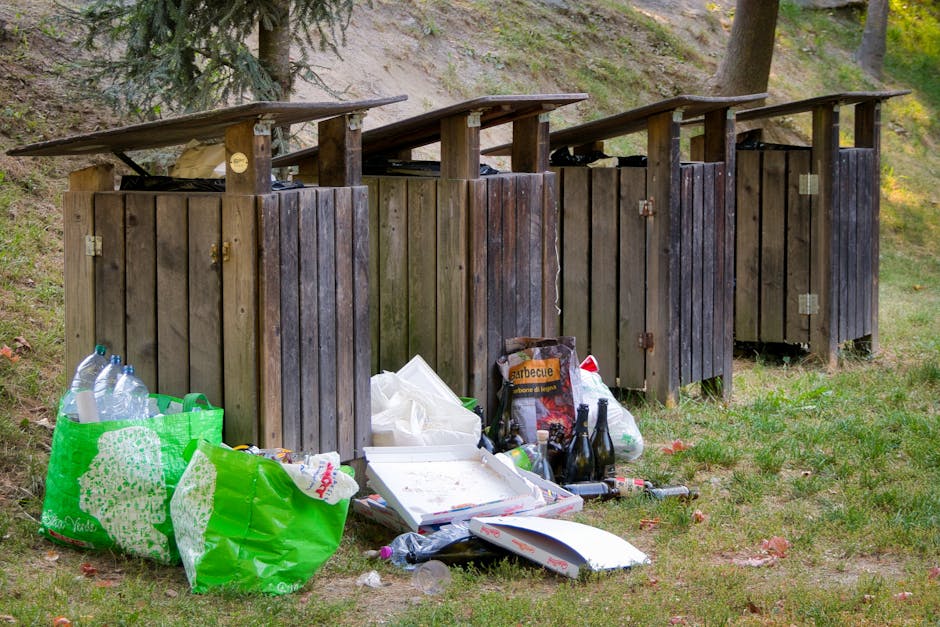
Islington Council rules for rubbish disposal in Finsbury Park: a practical local guide
If you live or work in Finsbury Park, rubbish disposal sounds simple until it suddenly isn't. One missed bin day, one black sack left beside the communal bins, or one bulky item dumped too early can quickly turn into a headache. The Islington Council rules for rubbish disposal in Finsbury Park are there to keep streets clear, reduce fly-tipping, and make sure waste is handled safely. But the day-to-day reality is a little more nuanced, especially if you're dealing with flat-share waste, garden waste, furniture, or renovation debris.
This guide breaks the topic down in plain English. You'll learn how the rules generally work, what residents and landlords need to watch out for, when council services are the right fit, and when a professional clearance option may be the smoother choice. Let's face it, nobody wants to spend a Saturday morning dragging a broken wardrobe down three flights of stairs only to discover it was not set out correctly anyway.
For readers who want a broader overview of practical clearance help in the area, it can also be useful to look at waste removal services in Finsbury Park and the related house clearance options that are designed for larger jobs.
Table of Contents
- Why Islington Council rules for rubbish disposal in Finsbury Park matters
- How the rules work in practice
- Key benefits and practical advantages
- Who this is for and when it makes sense
- Step-by-step guidance
- Expert tips for better results
- Common mistakes to avoid
- Tools, resources and recommendations
- Law, compliance, standards, or best practice
- Options, methods, or comparison table
- Case study or real-world example
- Practical checklist
- Conclusion
- Frequently asked questions
Why Islington Council rules for rubbish disposal in Finsbury Park Matters
Waste rules matter most when they stop being abstract. In a busy part of north London like Finsbury Park, rubbish is visible. It sits in front of terraced houses, around flats, by shopfronts, and in shared alleyways. If disposal is handled badly, it can create smells, block pavements, attract pests, and make a street feel neglected very quickly.
The council's rules also matter because rubbish in the wrong place can become a wider problem for neighbours. One overflowing bin can affect an entire building. One abandoned sofa can encourage more dumping. One bag of mixed waste can delay collection or cause contamination in recycling. Small things, but they stack up.
There's also a cost angle. When waste is left out incorrectly, residents may face warnings, enforcement action, or the inconvenience of having to re-sort everything and wait for the next collection. If you're managing a flat, renting out a property, or running a local business, that risk is even more relevant. Compliance is not exciting, admittedly. But it saves time, stress, and avoidable mess.
Practical takeaway: The best rubbish strategy in Finsbury Park is not just "put it out and hope." It is to understand what goes where, when it can be collected, and which items need a separate route entirely.
How Islington Council rules for rubbish disposal in Finsbury Park Works
The exact rules can change over time, so the safest approach is to treat this as a working framework rather than a fixed promise. In general, Islington Council's rubbish disposal system follows a few familiar UK local-authority principles: household waste goes into the correct bin, recyclables are separated, collections happen on set days, and bulky or specialist waste usually needs a different process.
In a place like Finsbury Park, the practical experience often depends on the property type. A ground-floor house with a private front area is easier to manage than a converted building with a narrow staircase, shared bins, and limited storage. That's just the reality of London housing. If you live in a flat, you may need to think about communal bin stores, building rules, and access for collection crews.
Here is the simplest way to think about it:
- General household waste should be bagged correctly and placed in the designated bin or container.
- Recycling needs to be clean, sorted, and free from food residue where required.
- Food waste should go into the correct food caddy system if provided.
- Bulky items such as furniture, mattresses, or white goods often need a separate collection route.
- Building waste from DIY or refurbishments should not be mixed into ordinary household bins.
That last point catches people out a lot. A few rubble bags from a bathroom refresh can look harmless enough, but once you mix them with domestic rubbish you may find collections refused or delayed. For construction-heavy jobs, a dedicated service such as builders waste clearance is usually the cleaner, more sensible option.
People also underestimate the admin around larger clearances. If you're clearing a flat after tenants move out, or dealing with multiple categories of waste at once, a service like flat clearance can reduce the number of decisions you have to make on the spot. And sometimes that matters more than anything else.
Key Benefits and Practical Advantages
Following the rules is not just about avoiding problems. There are real practical advantages to doing rubbish disposal properly in Finsbury Park.
- Cleaner streets and shared spaces: waste kept in the right place is less likely to spill, smell, or attract pests.
- Fewer collection issues: correct sorting makes it less likely that bins are left uncollected.
- Lower risk of complaints: neighbours in flats and terraces notice waste immediately, especially in shared entrances.
- Better recycling outcomes: clean, separated materials have a far better chance of being processed properly.
- Less stress on moving day: if you are leaving a property, you avoid last-minute scrambles and awkward conversations with landlords or managing agents.
There is a less obvious benefit too: rubbish discipline makes a home or business feel calmer. You know where everything goes. You know what is due out. You are not constantly wondering whether that old chair can sit there "just for tonight." We have all seen how that goes. It becomes "just for tonight" for a week.
If you are dealing with items that still have use left, it may be worth separating them from true waste. For example, good-condition furniture can sometimes be managed through furniture clearance or furniture disposal, depending on condition and what needs collecting.
Who This Is For and When It Makes Sense
This topic is relevant to a wider group than many people realise. It is not only for homeowners with a full loft or a one-off bulky item. The people most likely to need a solid grasp of Islington Council rubbish rules include:
- tenants in flats and shared houses
- landlords preparing a property for new occupants
- homeowners clearing out after a move, renovation, or bereavement
- small businesses that produce regular waste
- office managers dealing with desks, chairs, packaging, and old electronics
- builders or tradespeople working on compact urban sites
It also makes sense for anyone whose rubbish is not "normal" household rubbish. A loft full of seasonal items, a garage with mixed clutter, or a garden pile after a weekend of pruning can all move beyond standard bin rules quite quickly. In those situations, a targeted service such as garage clearance or garden clearance may be more efficient than trying to force everything into a council collection model.
If you run a workplace, the same principle applies. Waste from desks, paper, archive clear-outs, and packaging must be treated carefully. For a business, the wrong disposal setup can affect your workflow and your professional image at the same time. Nobody enjoys a reception area that looks like a skipped storage cupboard.
Step-by-Step Guidance
Here is a practical way to approach rubbish disposal in Finsbury Park without overthinking it.
- Identify the waste type. Separate household waste, recycling, food waste, bulky items, garden waste, and construction debris.
- Check the current local collection arrangement. Confirm your collection day, bin type, and any property-specific instructions from your managing agent or landlord.
- Keep recyclables clean and dry. Food contamination is a common reason recycling becomes unusable. A quick rinse is usually better than dumping everything together.
- Use the right container. If your building has communal bins, do not leave waste beside them because the bin is full. That usually creates more trouble than it solves.
- Set items out at the right time. Too early and you clutter the pavement. Too late and you miss collection. A narrow window is normal in London.
- Book a separate service for large or awkward items. Think mattresses, sofas, office chairs, old fencing, and mixed junk. These rarely fit the standard route.
- Keep records if you manage a property or business. Even a simple note of what was removed and when can save a lot of back-and-forth later.
If the job is larger than you first thought, it is usually better to switch course early rather than fight the bins. A service like home clearance or office clearance can help when you are dealing with mixed items, not just one neat category of rubbish.
Small aside: if you have ever stared at a pile of waste and thought, "how did this happen in one weekend?", you are in good company.
Expert Tips for Better Results
After a while, you start to notice the same waste problems over and over. Most of them are avoidable with a bit of planning.
- Sort before the pile grows. A single bag of mixed rubbish is manageable. Five bags, three boxes, and a broken shelf all together is where people lose momentum.
- Flatten and compact where safe. Cardboard boxes and some packaging can be reduced in volume, which makes bin space go further.
- Do not store waste in communal hallways. It looks untidy, can block access, and may cause friction with neighbours or building management.
- Keep hazardous items separate. Paint, chemicals, sharp objects, and some electricals need more care than ordinary rubbish.
- Use one clear decision rule: if it is too big, too heavy, or too mixed to fit the normal collection system, move it out of that system.
One more useful tip: if you are disposing of furniture, choose the route based on condition, size, and convenience. If the item is reusable but awkward, a dedicated furniture removal option may be the cleanest fix. If it is broken and mixed with other waste, broader clearance may be better. The point is not to be perfect. It is to be consistent.
And for businesses, consistent waste handling builds trust with staff and visitors alike. A tidy back-of-house area often says more than a polished front desk ever will. Funny, but true.
Common Mistakes to Avoid
The most common mistakes with rubbish disposal in Finsbury Park are usually simple, which is exactly why they keep happening.
- Leaving waste beside bins: if the bin is full, many people stack bags next to it. That often becomes fly-tipping in practice, even if it started as an innocent workaround.
- Mixing waste streams: recycling should not be contaminated with food, liquids, or general rubbish.
- Putting out bulky items without checking the route: sofas, mattresses, and old cupboards do not magically become council bin waste because they are on the pavement.
- Ignoring building rules: some flats have strict communal waste procedures. If you overlook them, you may end up annoying everyone in the block.
- Underestimating renovation waste: a small DIY job can produce a surprising amount of debris.
- Leaving clearance too late: if you wait until moving day, you can end up rushing and making avoidable mistakes.
To be fair, most of these happen because people are busy, not careless. But councils and managing agents usually care about the outcome, not the reason. That is just how it goes.
Tools, Resources and Recommendations
You do not need fancy tools to manage rubbish well, but a few basics make life much easier.
- Strong bin bags: reduces splits and mess when moving waste short distances.
- Labelled boxes or sacks: helpful if you are separating recycling, donation items, and rubbish.
- Work gloves: useful for old furniture, broken packaging, or garden waste.
- Dust sheets or tarpaulin: helpful if you are clearing an attic, garage, or shed and want to protect floors.
- Phone reminders: a simple reminder the night before collection day avoids missed pickups.
For more substantial clearances, the right service matters. If you are handling contents from an entire property, house clearance or loft clearance may save time and reduce disruption. If you are dealing with accumulated waste rather than one-off items, a more general waste removal service can be a better fit.
For readers thinking about the values behind disposal choices, the company's recycling and sustainability approach is also worth reviewing. In a dense area like Finsbury Park, a little extra care about waste separation really does add up.
Law, Compliance, Standards, or Best Practice
Waste disposal is one of those areas where local rules, property arrangements, and general UK waste duties overlap. You do not need to be a legal expert to stay compliant, but you do need to follow the basics carefully.
In practical terms, the key best practices are:
- use the correct disposal route for the waste type
- do not abandon waste on pavements, kerbs, or beside communal bins
- keep recyclable material as clean and uncontaminated as possible
- separate household waste from business waste
- treat hazardous or bulky items differently from everyday rubbish
- use insured, properly organised clearance help when the job is beyond normal collection
This is especially important for landlords, letting agents, and small businesses. If waste is left behind after a tenancy ends, or if commercial waste is not handled responsibly, the problem can quickly escalate from inconvenience to complaint. Good record-keeping and clear procedures help. Nothing glamorous there, but it works.
If you are choosing a clearance provider, check that they present themselves professionally and have clear policies around safety and operations. Pages such as health and safety policy, insurance and safety, terms and conditions, and payment and security can be useful trust signals when you are comparing providers.
Options, Methods, or Comparison Table
There is no single best way to handle rubbish in Finsbury Park. The right method depends on the type of waste, the size of the job, and how quickly it needs to disappear from your life. Which, honestly, is often the real question.
| Method | Best for | Advantages | Limitations |
|---|---|---|---|
| Council bin collection | Routine household waste and basic recycling | Simple, familiar, part of normal household routine | Not suitable for bulky, mixed, or excessive waste |
| Special collection or booked pickup | Bulky household items and larger one-off disposals | More suitable for awkward items than standard bins | Requires planning and may need specific booking steps |
| Professional clearance service | Flat clearances, house clearances, office waste, mixed loads | Fast, practical, handles lifting and sorting | Usually more expensive than standard collection |
| DIY trip to a facility | Householders with transport and time | Control over timing and sorting | Labour-intensive, time-consuming, and not ideal for heavy loads |
In real life, many people use a mix of methods. A resident might use the council route for everyday waste and call in help for one big clear-out. That is often the smartest approach, not the fanciest one.
Case Study or Real-World Example
Imagine a two-bedroom flat near the park, shared by three tenants. They are moving out at the end of the month. The kitchen bins are fine for daily waste, but by the final week the place contains a broken desk chair, two old suitcases, a shelf unit, packaging from new furniture, and a bag of mixed items from the hallway cupboard.
At first, it feels manageable. Then the pile grows. The communal bin store is already tight, the lift is small, and there is no easy way to get the shelf unit downstairs without scuffing walls. This is the point where trying to squeeze everything into the normal bin routine becomes more trouble than it is worth.
The better approach is usually to separate the light household rubbish, keep recycling clean, and arrange a dedicated clearance for the bulky mixed items. If the flat is left completely full, a broader service like flat clearance makes much more sense than a series of improvised trips with overfilled bags. The result is quicker, tidier, and far less stressful for everyone involved.
That kind of situation is common in London. Not dramatic, just busy. And once you have handled a few, you start to see the pattern. Early sorting always wins.
Practical Checklist
Use this checklist before you put rubbish out or book a clearance.
- Have I identified the exact type of waste?
- Is anything recyclable, reusable, or donation-worthy?
- Does the item need a bulky waste or specialist route?
- Have I checked the collection timing for my property?
- Is the waste bagged, boxed, or bundled safely?
- Have I kept hazardous or sharp items separate?
- Is the bin store or pavement area clear for access?
- Do I need landlord, agent, or building permission first?
- Would a dedicated clearance service be simpler for this job?
- Have I kept any receipts, notes, or records if this is for a tenancy or business?
If you can tick most of those off, you are usually in good shape. If not, pause and reorganise before the pile becomes a problem. A little extra time now can save a lot later.
Get a free quote today and see how much you can save.
Conclusion
The core message is straightforward: the Islington Council rules for rubbish disposal in Finsbury Park are there to keep waste predictable, safe, and manageable in a very busy part of London. The more you understand the system, the less likely you are to face missed collections, neighbour complaints, or a last-minute scramble with bulky rubbish at the front door.
For everyday waste, a bit of sorting and timing goes a long way. For larger clear-outs, mixed items, or jobs involving furniture, garden waste, or renovation debris, it is often wiser to use a dedicated clearance route rather than pushing the council system past its limits. That is not being fussy. It is being practical.
And if you are still weighing up your options, remember this: the best rubbish plan is the one that keeps your space calm and your conscience clear. Simple as that, really.
Frequently Asked Questions
What are the basic Islington Council rules for rubbish disposal in Finsbury Park?
In general, rubbish should go into the correct bin or collection stream, recyclables should be separated and kept clean, and bulky or specialist waste should not be left out with normal household rubbish. The practical details can vary by property type, so it is worth checking your building arrangement as well.
Can I leave black bags next to a full communal bin?
Usually, that is a bad idea. Even if the bin is full, waste left beside it may be treated as fly-tipping or unauthorised dumping. It is better to hold the waste until the next collection or arrange a separate removal if the volume is too high.
How should I get rid of old furniture in Finsbury Park?
That depends on the item's condition and size. Some furniture may need a dedicated bulky item route, while larger clearances are better handled through a furniture-specific service or a broader property clearance. If you have several items, furniture clearance is often the more practical choice.
What counts as bulky waste?
Bulky waste usually means items that are too large, heavy, or awkward for normal household bins. Think sofas, mattresses, wardrobes, large appliances, and similar items. These often need separate collection or a clearance service.
Do garden clippings and soil go in normal household bins?
Often not in any large amount. Small amounts may be manageable, but heavier garden waste, branches, or soil usually need a more suitable route. A dedicated garden clearance can be helpful after pruning or a full tidy-up.
Can I mix DIY rubbish with normal household waste?
No, that is usually a mistake. Rubble, tiles, timber offcuts, plaster, and similar materials should be treated as builders' or renovation waste. A service like builders waste clearance is designed for that kind of load.
What should businesses in Finsbury Park do with waste?
Businesses should keep commercial waste separate from domestic rubbish and use an appropriate removal route. If you run an office, shop, or shared workplace, business waste removal may be more suitable than trying to use household disposal methods.
How can I avoid problems with shared-bin flats?
Keep waste sorted, avoid blocking communal areas, do not overfill bins, and follow any building-specific instructions. In flats, a small amount of poor waste behaviour spreads quickly through the whole building, so consistency matters more than people think.
Is it better to use the council service or a clearance company?
For routine rubbish, the council route is usually fine. For bulky, mixed, time-sensitive, or high-volume jobs, a clearance company is often easier. The right choice depends on how much work you want to do yourself and how fast the space needs to be cleared.
What if I need to clear a property quickly after a move or tenancy end?
That is a common situation in Finsbury Park. If the property has mixed contents, furniture, and leftover waste, a broader service such as home clearance or house clearance can save time and reduce stress.
How do I know whether a clearance provider is trustworthy?
Look for clear information about safety, insurance, terms, payment, and how they handle recycling or disposal. Pages like about us, insurance and safety, and recycling and sustainability can help you judge whether the provider seems organised and transparent.
What is the easiest first step if I am overwhelmed by rubbish?
Start by separating items into rough groups: keep, donate, recycle, bulky waste, and general rubbish. Then decide which piles can go through normal collection and which need a separate solution. If the job still feels messy, step back for ten minutes and re-sort. That little pause helps more than people expect.
Need a calmer, simpler way to deal with rubbish and bulky items in Finsbury Park? Explore the service pages, compare your options carefully, and choose the route that keeps things tidy without making the job harder than it needs to be.